Cincinnati residential terrain features heavy clay soil, limestone river bluffs, and dense deciduous tree cover that retain stormwater run-off. Subterranean moisture channels across neighborhoods like Mount Lookout and…
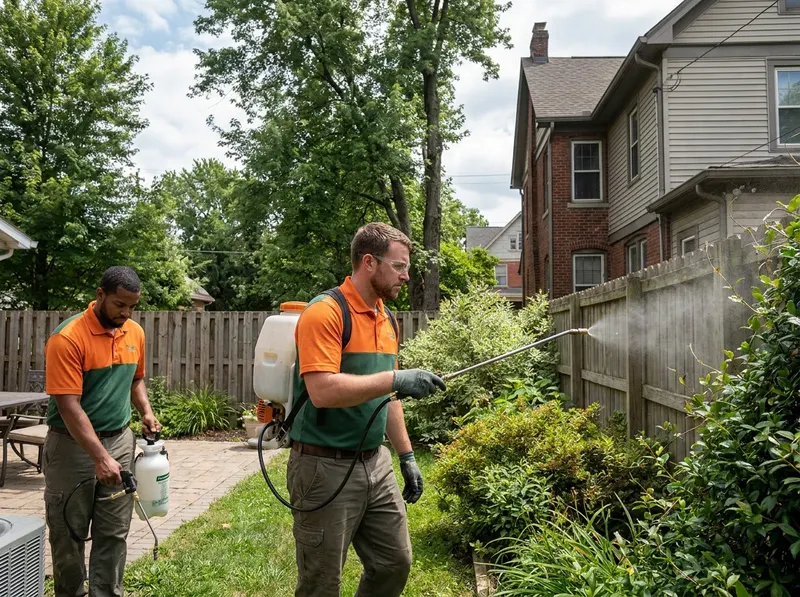
Cincinnati residential terrain features heavy clay soil, limestone river bluffs, and dense deciduous tree cover that retain stormwater run-off. Subterranean moisture channels across neighborhoods like Mount Lookout and Clifton foster ideal oviposition zones for container-breeding pests. Our protocol targets the underside of broadleaf foliage up to 10 feet high where adult mosquitoes harbor during midday heat, using standards established by the CDC Division of Vector-Borne Diseases. In older urban density areas like Over-the-Rhine and Mount Adams, structural brick retaining walls and tiered ornamental terraces create moisture microclimates that amplify infestations if drainage conduits remain untreated.
Effective perimeter stabilization balances targeted contact adulticides with long-chain insect growth regulators to interrupt reproduction without monthly retainers. Technicians treat unremovable catchment basins with natural bacterial spores outlined by the EPA guidelines for Bacillus thuringiensis israelensis to eliminate immature pupae before flight stages occur. Low-lying yards near Ault Park and along dense wooded corridors in Hyde Park require botanical micro-encapsulated pyrethrins that bind to vegetation surfaces without leeching into regional groundwater, satisfying regulations from the Ohio Department of Agriculture Pesticide Regulation Section. Properties adjacent to humid public recreation corridors like the Cincinnati Zoo & Botanical Garden and Spring Grove Cemetery and Arboretum experience elevated localized pressure from vector populations known to transmit West Nile virus, making precise water mapping necessary.
Homeowners selecting single-event barrier treatments for outdoor gatherings face a deliberate operational trade-off: a rapid-knockdown application provides roughly 14 to 21 days of suppressed biting activity, whereas recurring seasonal source interruption controls recurring hatch cycles triggered by Midwest summer rains. Treatment steps proceed methodically: Step 1 involves identifying non-draining receptacles, clogged downspouts, and birdbaths across the property footprint. Step 2 applies biological larvicide granules to all standing retention points that cannot be physically inverted. Step 3 delivers an ultra-low-volume horizontal mist to exterior leaf surfaces, dense groundcover, and crawlspace perimeters using equipment configured under Entomological Society of America vector application recommendations. Step 4 maps structural boundary perimeters in districts such as Pleasant Ridge, Northside, and College Hill to limit re-entry from untended neighboring brush. Step 5 mandates a 30-minute curing window to ensure liquid deposits dry thoroughly prior to full re-entry by children and pets.
Every job gets a firm, written price after an on-site visit.
Tell us about your mosquito population reduction job in Cincinnati and we'll send a clear, written quote, usually the same day.
 DesertCrown Pest Services