Commercial kitchen pest management in Cincinnati targets the micro-environments inside food handling facilities where grease, heat, and moisture aggregate. Older building foundations along Over-the-Rhine and Northside…
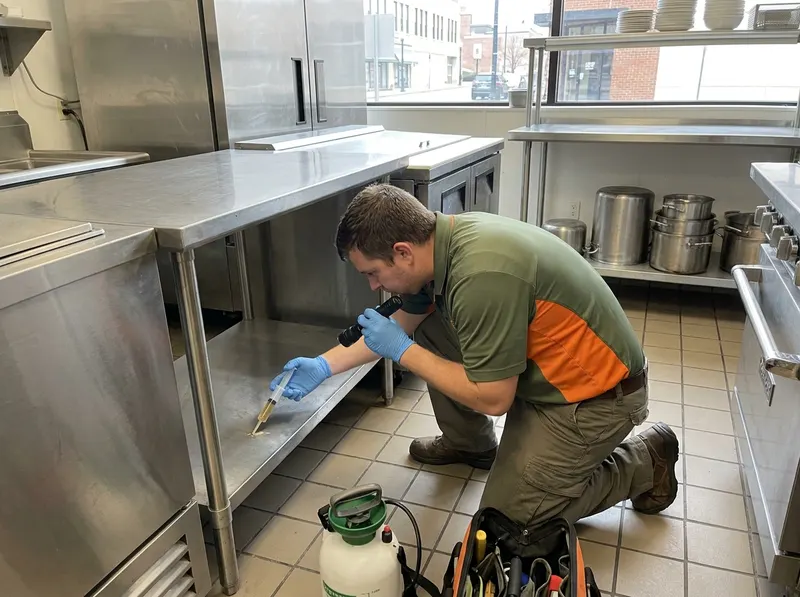
Commercial kitchen pest management in Cincinnati targets the micro-environments inside food handling facilities where grease, heat, and moisture aggregate. Older building foundations along Over-the-Rhine and Northside frequently feature rubble walls, aging cast-iron utility lines, and subterranean utility penetrations that serve as direct travel corridors for Blattella germanica populations. Interlocking stainless steel prep stations, hollow table legs, and rubber compression gaskets on refrigeration units create temperature-stable harborage areas adjacent to continuous food sources. Left unaddressed, localized pest populations compromise operations regulated by the Ohio Department of Health and lead to critical health code violations under standard food service sanitation rubrics enforced by Cincinnati Health Department environmental health sanitarians.
Effective defense shifts away from calendar-based surface sprays toward mechanical exclusion, bio-remediation, and precision injection. Standard liquid sprays applied to warm tile can vaporize into breathing zones and violate FDA Food Safety Modernization Act standards. DesertCrown Pest Services implements targeted integrated pest management. Technicians introduce enzymatic digestion agents directly into commercial floor drains to degrade organic biofilms that feed drain fly larvae (Psychodidae). In historic brick masonry kitchens across Clifton and Mount Adams, structural shifting creates perimeter wall voids where unsealed gas and electrical runs enter the building. Sealing these voids using copper mesh and silicone sealants prevents ingress from urban rodents tracked through Hamilton County utility easements.
Treatment execution follows a five-tier sequence designed to eliminate vectors while kitchen operations pause. Step 1 requires an intensive moisture, plumbing, and thermal imaging inspection across drop ceilings, walk-in condenser pans, and under-counter dishwashers. Step 2 applies mechanical cleanouts, scraping accumulated grease layers and introducing industrial insect growth regulators compliant with the EPA Office of Pesticide Programs to disrupt juvenile molting cycles without chemical volatility. Step 3 involves micro-injecting botanical and non-repellent abamectin gels into structural seams, door hinges, and hollow equipment frames where insects congregate. Step 4 treats interior grease traps and secondary trench drains using biological spore formulations certified under NSF International standards for non-food zones. Step 5 installs tamper-resistant rodent monitoring stations along interior perimeter runs according to specifications verified against CDC Rodent Control guidelines.
Choosing targeted cleanout interventions instead of binding monthly retainers provides higher operational security for kitchens in Hyde Park, Oakley, and College Hill. Traditional multi-year exterminator contracts incentivize recurring visits with minimal active labor, often consisting of changing sticky boards while internal populations persist behind cooking ranges. A targeted decontamination deployment prioritizes immediate physical disruption, grease biofilm breakdown, and verifiable void exclusion. Facilities adjacent to lush canopies or parks, such as restaurants operating near Mount Lookout or Pleasant Ridge, face elevated seasonal pressure from field rodents shifting indoors between October and March. Intercepting these pests before they contact food preparation surfaces preserves health code integrity and prevents stock destruction without binding operations to perpetual billing models.
Every job gets a firm, written price after an on-site visit.
Tell us about your commercial kitchen pest management job in Cincinnati and we'll send a clear, written quote, usually the same day.
 DesertCrown Pest Services